Blog > What Every Landowner Needs to Know
Water Rights in East Texas: What Every Landowner Needs to Know
Texas is a huge state with unique laws about water — especially groundwater — that don’t work the way most people think.
If you own land or are thinking about buying property in East Texas, it’s vital to understand how water rights work, why they’re in the news, and what risks and protections you should consider.
This blog breaks down the legal basics, real-world controversies, and practical tips for landowners

What Are Water Rights in Texas?
In Texas, groundwater (the water underground in aquifers) is treated differently from surface water (like rivers and lakes).
Under Texas law, a landowner owns the groundwater beneath their land as real property — meaning it’s considered part of your property.
This gives you the right to drill and produce water from beneath your land.
However, landowners do not have a guaranteed right to capture a set amount of the water beneath their land — and regulations or local rules can affect how and how much water gets pumped.
The “Rule of Capture”: Texas’s Unique Water Law
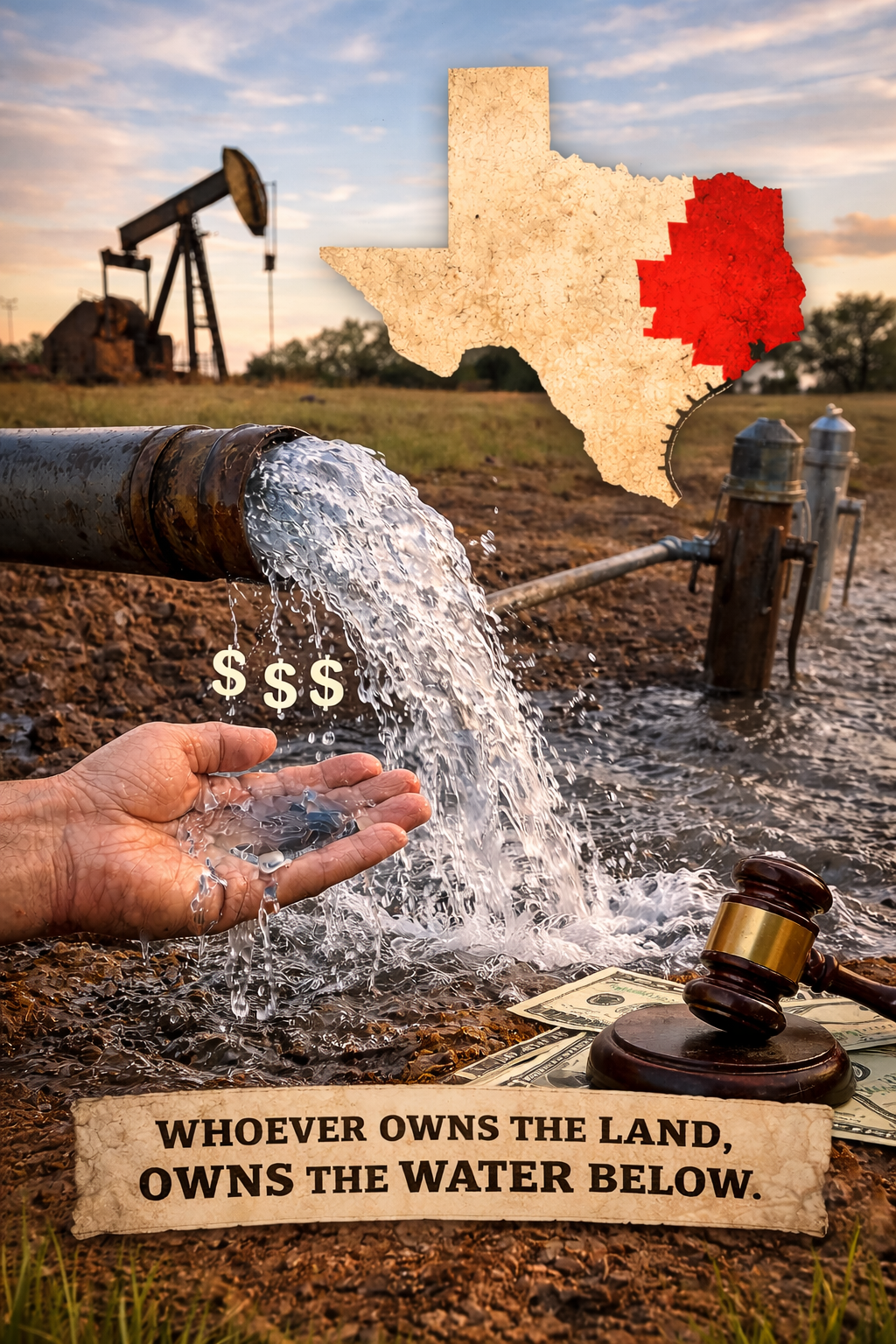
Texas generally follows the Rule of Capture for groundwater — a legal concept that says a landowner can pump as much water as they can capture from beneath their land, even if it reduces the amount available to neighbors.
This rule:
Does not hold a landowner liable if pumping lowers other nearby wells (unless malicious or wasteful).
Has very few statewide restrictions — meaning landowners have considerable freedom to use groundwater.
That’s why Texas has historically been called a state of limited regulation and strong landowner pumping rights.
Groundwater Conservation Districts (GCDs): Local Management
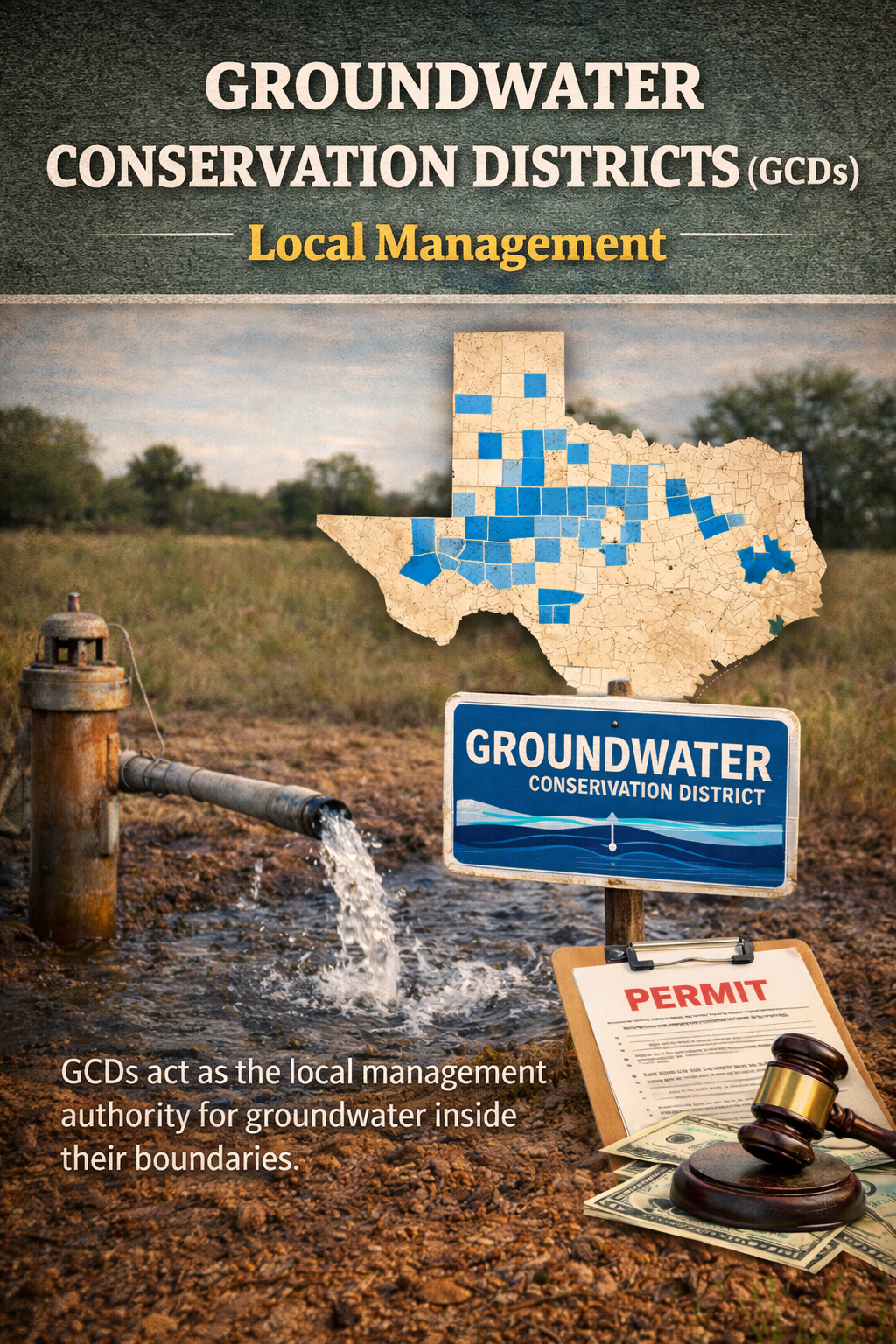
Even though Texas doesn’t have one agency regulating groundwater statewide, the Legislature lets local areas create Groundwater Conservation Districts (GCDs). These districts can:
Monitor pumping and water levels
Require permits for drilling and water production
Adopt rules to prevent waste and protect the aquifer
GCDs act as the local management authority for groundwater inside their boundaries.
This localized oversight can restrict pumping behavior that would otherwise be permitted under the rule of capture, especially when a district finds that aquifer levels are being stressed or depleted.
Why East Texas Is in the Headlines
Recently, East Texas has become a flashpoint in the groundwater debate.
Controversial Export Plans
Private companies have applied to pump billions of gallons of groundwater annually from aquifers in Anderson, Henderson, and surrounding counties — and possibly transport it out of the region.
Local residents, landowners, and even lawmakers have expressed alarm, saying:
Massive pumping could deplete aquifers that residents, farmers, and ranchers rely on.
Permits might allow water to be sold or moved far from where it’s needed.
The companies involved often invoke the Rule of Capture, calling it a “bedrock principle of Texas property law”.
Legislative Action and Local Opposition
State Representative Cody Harris authored a bill (HB 27) that would have paused new export permits until a study on groundwater impacts was completed, but the legislature stripped key protections and failed to pass the original version.
Meanwhile, residents in areas like Leon County have actively opposed these export plans, saying they could threaten long-term water supply for neighbors and local wells.
This combination of legal ambiguity, local resistance, and big-scale proposals is why the issue is gaining attention from news outlets and officials across the state.
What This Means For Landowners
If you own or are considering land in East Texas, here are the key takeaways:
✔ Understand Your Property’s Water Rights
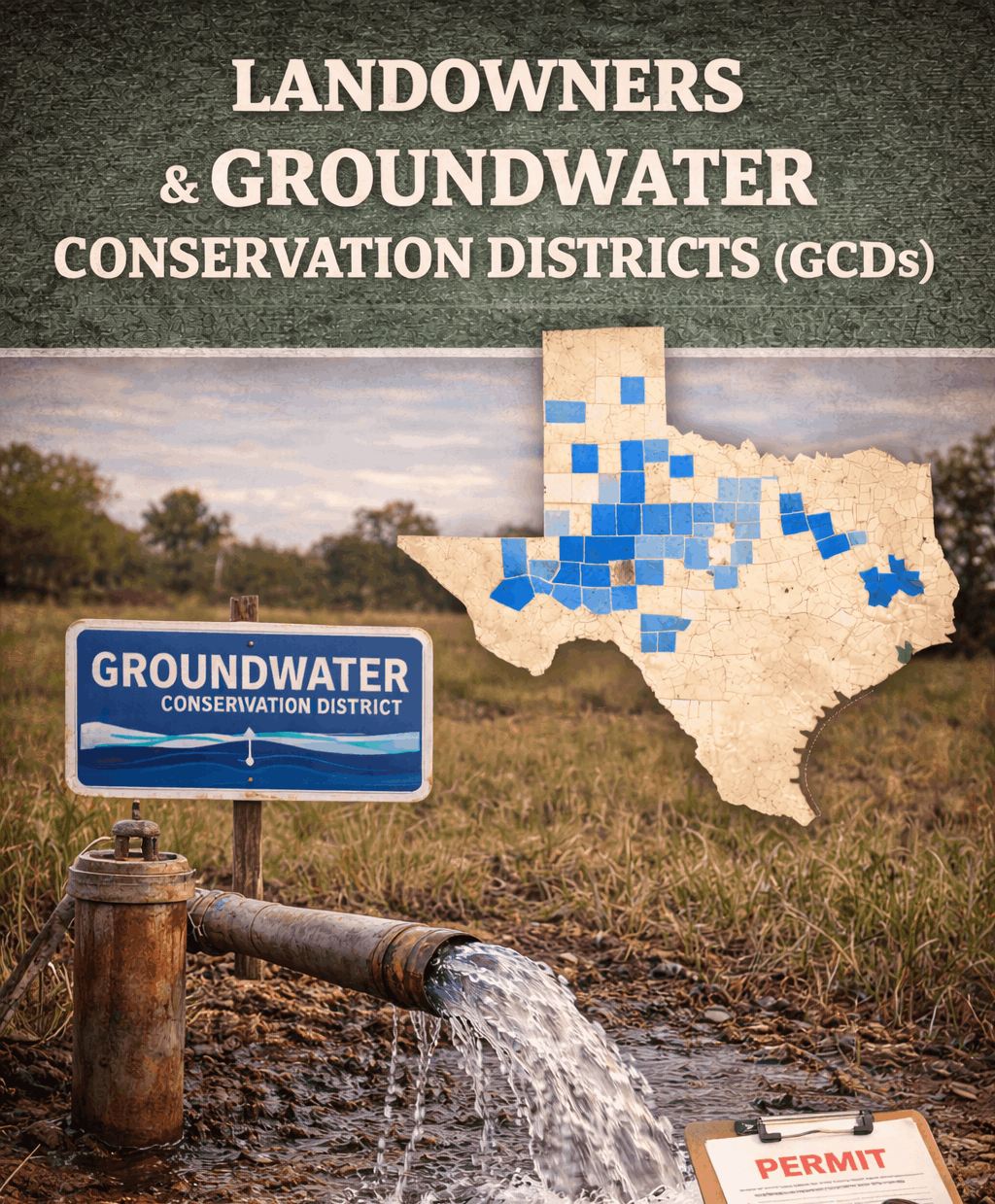
Confirm whether your land lies within a GCD.
Review the deed to see whether water rights are included or reserved.
✔ Know the Local Aquifer and Demand
Some aquifers have high demand or declining levels.
High-capacity extraction nearby can affect well yield.
✔ Watch Local Rules and Permit Activity
GCDs can change how groundwater use is managed.
Permit applications like the big East Texas plans may affect future access.
✔ Stay Informed on Legislation
Lawmakers and local groups are actively debating whether to change or strengthen how groundwater is regulated.
Water isn’t just a commodity — it’s a lifeline for homes, farms, and communities. Texas’s combination of private groundwater ownership and decentralized management creates both opportunities and risks for landowners.
By understanding:
what the law says,
how the Rule of Capture works,
and what local controversies are unfolding,
you can make more informed decisions about your land and your water.
FOR FURTHER READING: